
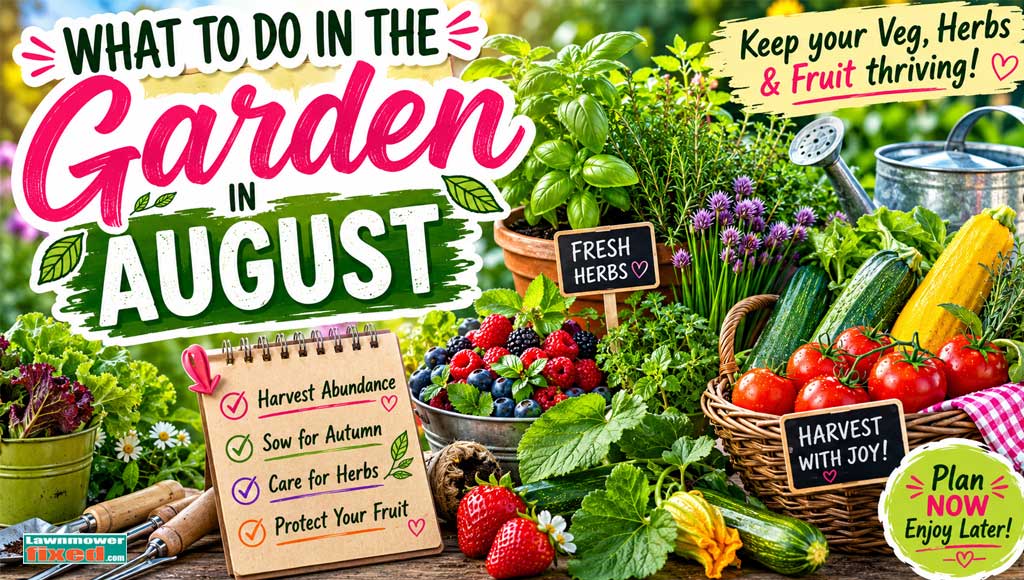
August is a month of contrasts in the garden. On one hand, your plants are in full swing — tomatoes ripening daily, courgettes hiding under leaves, herbs reaching their peak aroma. On the other hand, there’s a quiet shift happening: days are getting shorter, growth is slowing, and the first whispers of autumn are in the air.


This is a month to harvest with gusto, care for what’s still producing, and start sowing for the cooler days ahead.
Here’s your detailed guide for keeping the garden thriving right through late summer and into autumn.
Vegetable Garden Tasks for August
1. Keep Watering – but Be Smart About It
August heat can be brutal, especially for containers and raised beds. Water deeply and less often to encourage roots to grow downwards. Early morning or late evening watering is best, reducing evaporation and preventing leaf scorch.


Tip: A layer of mulch (straw, compost, or shredded leaves) will help hold moisture and keep soil temperatures stable.
2. Harvest Little and Often
Many veg, including beans, courgettes, and cucumbers, produce more if you harvest regularly. Leaving mature fruits on the plant tells it to stop producing, so keep picking while they’re young and tender.
Tara’s tip: Don’t be shy about removing courgettes the size of your forearm — they’ll stop new ones from forming otherwise.
3. Feed Hungry Crops
Tomatoes, peppers, cucumbers, and squash are at their peak production and need extra nutrition now. Use a high-potash liquid feed (like tomato food or seaweed extract) once a week to support fruiting.
4. Sow for Autumn and Winter
August is your last good window for sowing quick-maturing crops and cool-weather greens.
Try:
- Leafy greens: spinach, rocket (arugula), kale, chard, mustard greens
- Root crops: beetroot, turnips, radish
- Salads: winter lettuce varieties such as ‘Winter Density’ or ‘Arctic King’


If space is tight, sow in seed trays or modules to plant out later when summer crops finish.
5. Clear and Refresh Beds
Pull up any tired or bolted crops, such as old lettuce or coriander. Lightly fork over the soil, add a layer of compost, and you’re ready for your next planting.
Herb Garden Tasks for August
1. Harvest for Fresh Use or Preserving
This is peak flavour time for many herbs. Pick in the morning, after the dew has dried but before the sun is high, for the best essential oil content.
Preservation options:
- Drying: Hang small bunches of thyme, oregano, or sage in a warm, airy spot.
- Freezing: Chop chives, parsley, or coriander and freeze in ice cube trays with water or oil.
- Herb butters: Mix soft herbs like basil or tarragon into butter for freezing.
Drying Herbs


Drying herbs the right way means preserving their flavour, colour, and essential oils — not just making them crispy.
Pick herbs in the morning after the dew has dried but before the heat of the day, when their oils are most concentrated.
Shake off any insects and gently rinse if needed, then pat dry with a clean towel. Gather small bunches and tie the stems with string or a rubber band, leaving space for air to circulate. Hang them upside down in a warm, dry, well-ventilated spot out of direct sunlight — too much heat or light can fade colour and flavour.
Most herbs take 1–2 weeks to dry fully; you’ll know they’re ready when the leaves crumble easily between your fingers. Once dry, strip the leaves from the stems, store in an airtight jar away from light, and use within 6–12 months for best flavour.
Freezing herbs
Freezing herbs is one of the easiest ways to keep their fresh flavour year-round, and it’s especially good for softer, high-moisture herbs like basil, parsley, dill, chives, and coriander. Start by picking healthy sprigs, rinsing gently, and patting completely dry — excess water can cause ice crystals and damage flavour. You can freeze herbs whole, chopped, or blended. For the simplest method, spread leaves on a tray in a single layer, freeze until firm, then transfer to airtight freezer bags or containers. For longer storage and easy portioning, chop the herbs and pack them into ice cube trays, covering with a little water or olive oil before freezing — perfect for dropping straight into soups, stews, or sauces. Label everything with the date, and aim to use within 6–8 months for the best taste.
Herb Butters


Herb butters are a delicious way to capture summer flavours and have them ready to use all year round.
Soft, aromatic herbs work best, as they blend smoothly into butter and release their oils when warmed. Start with unsalted butter at room temperature, then stir in finely chopped fresh herbs. Shape into a log using baking parchment, wrap well, and freeze or refrigerate. Slice off discs as needed for spreading on bread, topping grilled vegetables, or melting over fish and chicken.
Best herbs for herb butters:
- Basil – perfect with tomatoes or pasta
- Parsley – versatile and fresh-tasting
- Chives – mild onion flavour, great on baked potatoes
- Tarragon – lovely with chicken and fish
- Dill – ideal for seafood and potatoes
- Coriander (cilantro) – bright and citrusy for curries or grilled meats
- Oregano – bold and earthy for Mediterranean dishes
- Thyme – subtle savouriness for roasted veg and meats
Tara’s Tip: Mix and match – try parsley with lemon zest, or basil with a pinch of garlic for an instant flavour boost.


2. Trim Back Woody Herbs
After flowering, trim rosemary, sage, and lavender lightly to encourage fresh growth and keep them compact.
3. Sow Cool-Season Herbs
Coriander, parsley, dill, and chervil all prefer the cooler temperatures of late summer into autumn. Sow now for fresh leaves well into winter.
Fruit Garden Tasks for August
1. Pick Soft Fruit Regularly
Raspberries, blackberries, blueberries, and strawberries should be picked as soon as they ripen to avoid attracting pests.
2. Summer Prune Trained Fruit Trees
Espalier, cordon, and fan-trained apple or pear trees benefit from an August prune. This controls size, improves air circulation, and encourages fruiting spurs for next year.
3. Net Against Hungry Visitors
Birds can strip fruit in a day — protect ripening figs, grapes, and autumn raspberries with netting.
Your ripening fruit and veg are an open invitation to every bird, squirrel, rabbit, and even the odd deer passing by. Without protection, a perfectly good crop can disappear overnight. The simplest solution is netting, but it’s important to choose the right type and set it up properly.
What to look out for:
- Mesh size matters. Fine mesh (around 15–20mm) will stop small birds and insects, while slightly larger mesh (30–40mm) is enough for pigeons and blackbirds. If you’re keeping out cabbage white butterflies, go for insect mesh (around 1mm).
- Sturdy support. Netting should be held above the crop with canes, hoops, or a frame — don’t let it rest directly on the plants, as birds can still peck through and butterflies can lay eggs.
- Secure edges. Peg the netting firmly into the ground or weigh it down so wildlife can’t sneak underneath.
- Wildlife safety. Choose soft, wildlife-friendly netting to reduce the risk of birds or hedgehogs getting tangled. Check regularly for any trapped creatures.
- Easy access. Make sure you can lift or open part of the netting easily so you can harvest without damaging plants or the net.


Tara’s Tip: If you grow strawberries or blueberries every year, consider investing in a small fruit cage — it’s a once-off cost and makes netting easy and secure for years to come.
Looking Ahead – Preparing for Autumn
August isn’t just about maintaining the current garden; it’s also a time to prepare for the next season.
- Order autumn planting garlic and onions now before suppliers sell out.
- Think about cold protection for later in the year: cold frames, cloches, and fleece can extend the season for salads and herbs. It doesn’t have to look pretty; if it’s going to prolong your salad season, it’s definitely worth it.
- Plan your fall crops – brassicas, overwintering spinach, and hardy herbs.
- Compost prep – turn your compost heap to help it break down faster before winter.
If you’re planning to grow garlic or autumn-planted onion sets, timing is key. These crops need a cool start and a long growing period to develop properly before the following summer.
- Garlic – In most climates, plant between mid-October and late November. The soil should still be workable but cool enough to trigger bulb formation. In very mild areas, you can plant as late as early January, but earlier planting usually means bigger bulbs.
- Autumn-planted onion sets – These are sown in September or October so they can establish roots before winter. They then sit quietly over the colder months and put on rapid growth in spring, giving you an early summer harvest.
Why order now?
Popular varieties often sell out fast, and ordering early means you can choose the best types for your region. It also gives you time to prepare the bed: remove weeds, add well-rotted compost, and ensure good drainage — both garlic and onions hate sitting in waterlogged soil over winter.
Tara’s Tip: Avoid planting garlic or onions in the same spot as last year to reduce the risk of disease.
Tools & Supplies to Consider in August
- Pruning snips or herb scissors – for precise harvesting without damaging stems. If you use it to remove any diseased leaves or damage, ensure that you give it a quick clean to prevent cross-contamination.
- Mesh netting – to protect crops from pests and birds.
- Compost scoop – handy for refreshing container soil.
- Cold frame or cloche – for extending the harvest season into late autumn.
- Trug or basket: I always grab mine on the way to the polytunnel. Buy one that will last (mine sometimes gets left out in the rain! But it still looks just fine)
Final Thoughts
August is a month of both abundance and preparation. With regular harvesting, smart watering, and a bit of forward planning, you can keep your garden productive well beyond summer. Think of this as the bridge between the full bloom of July and the golden days of autumn — a time to savour what you’ve grown and set the stage for the months ahead.
See You in the Garden,
Tara 🌿
- About the Author
- Latest Posts


Tara Cunningham is the green-thumbed half of Lawnmowerfixed.com, where she shares simple, no-fuss gardening tips for time-poor homeowners.
She’s a lifelong plant lover with a soft spot for cherry tomatoes, shady corners, and low-maintenance herbs.