
Tomatoes are one of the most rewarding crops to grow — few things beat the taste of a sun-warmed, homegrown tomato fresh from the vine. But they can also be one of the trickiest for beginners. Every year around midsummer, garden groups start to fill with worried posts:
“My leaves are turning brown!”
“Why are my tomatoes rotting from the bottom up?”
“The whole plant has wilted overnight – what did I do wrong?”


If that sounds familiar, don’t panic. This guide covers the most common tomato-growing problems, what causes them, and how to fix (or prevent) them. Let’s break it down.
First, Understand What Tomatoes Need to Thrive
Before we get into what’s going wrong, it’s worth remembering what tomatoes love:
- At least 6–8 hours of direct sunlight per day
- Warm, consistent temperatures (15–30°C / 60–85°F)
- Even moisture — not too dry, not too soggy
- Regular feeding once flowers appear
- Good air circulation around the plant
If one of these conditions is off, your tomatoes will start to show it — often in the leaves first.
Yellowing or Browning Leaves

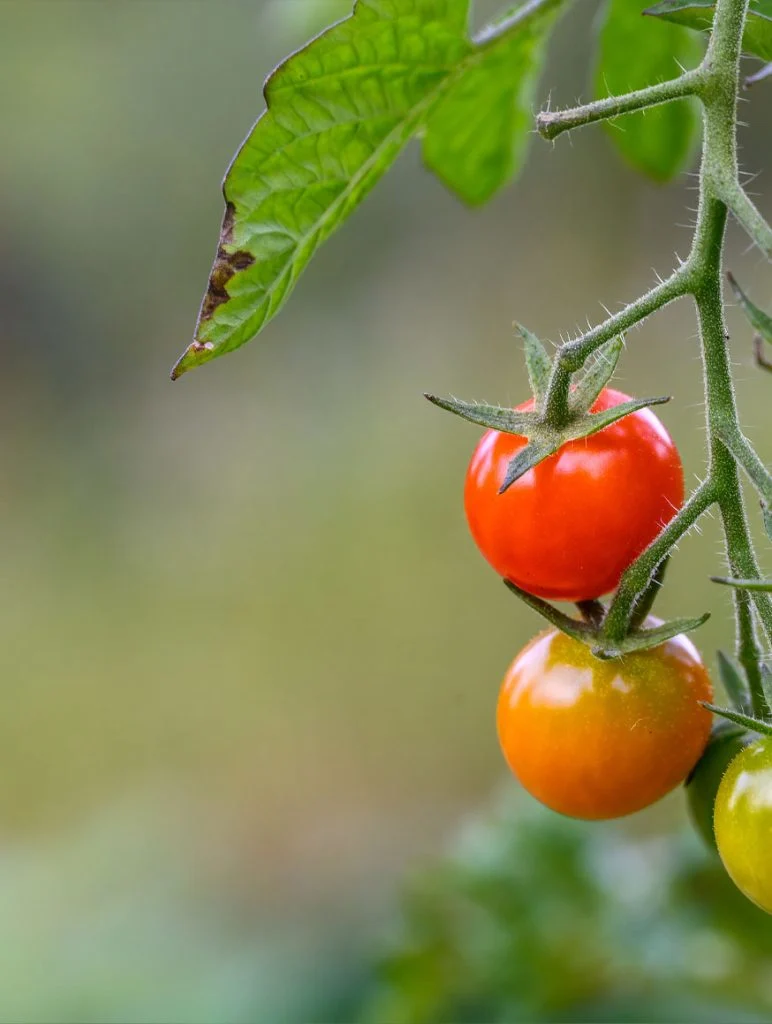
This is probably the most common tomato issue and can be caused by several things:
Nutrient Deficiency
- Nitrogen deficiency causes overall yellowing, especially in older leaves.
- Magnesium deficiency results in yellowing between leaf veins.
Solution: Use a balanced liquid feed or tomato fertiliser. For magnesium, a foliar spray of Epsom salts (1 tablespoon per liter/quart) can be helpful.
Watering Issues
- Underwatering causes leaves to curl, wilt, and brown at the tips.
- Overwatering can turn leaves yellow and lead to root rot.
Solution: Water deeply but infrequently, allowing the soil to partially dry out between waterings. More on this below.
Fungal Diseases
- Early blight starts as small brown spots on the lower leaves.
- Septoria leaf spot shows up as small, round grey spots with dark edges.
Solution: Remove affected leaves, improve airflow, and avoid watering the foliage.
How to Water Tomatoes Properly

Watering is where most tomato problems start. Tomatoes need consistency above all.
When to Water
- Early morning is best — it gives plants time to absorb moisture before the sun hits.
- Avoid evening watering if possible, especially in humid climates, to reduce the risk of fungal disease.
How to Water
- Always water at the base, not overhead.
- Give a deep soak rather than a light sprinkle — roots need water several inches down.
- Mulch around the base (with straw, compost, or even grass clippings) to hold in moisture and prevent soil splash.
How often to water?
- In hot weather: daily for container-grown tomatoes
- In-ground plants: every 2–3 days, depending on rainfall and soil
- Use the finger test: if it’s dry about 2 inches below the surface, it’s time to water.
You often read people talking about inconsistent watering of tomato plants, but there’s usually no explanation as to what that means:
Inconsistent watering means your tomato plants are going through cycles of being too dry, then suddenly soaked, rather than receiving steady, even moisture. For example, if the soil dries out completely and then gets a heavy watering (or a big rain), the plant’s roots can’t absorb nutrients properly, especially calcium — which leads to problems like blossom end rot or fruit cracking.
Tomatoes like a rhythm: not bone dry, not constantly soggy, but a regular routine where the soil stays slightly moist at all times. Think of it like sipping water throughout the day, rather than chugging a litre after hours of thirst!
Mulching: A layer of mulch (like straw, compost, grass clippings, or even shredded leaves) spread around the base of your tomato plants helps lock in moisture, reduce evaporation, and keep the soil temperature more stable. That means the roots stay cooler in the heat and the soil stays damp for longer, even on hot days. Mulch also helps prevent sudden dry-outs after watering, which is key for keeping your tomato plants happy and healthy. Bonus: it also reduces weeds and stops soil from splashing up onto the leaves, which can spread disease.
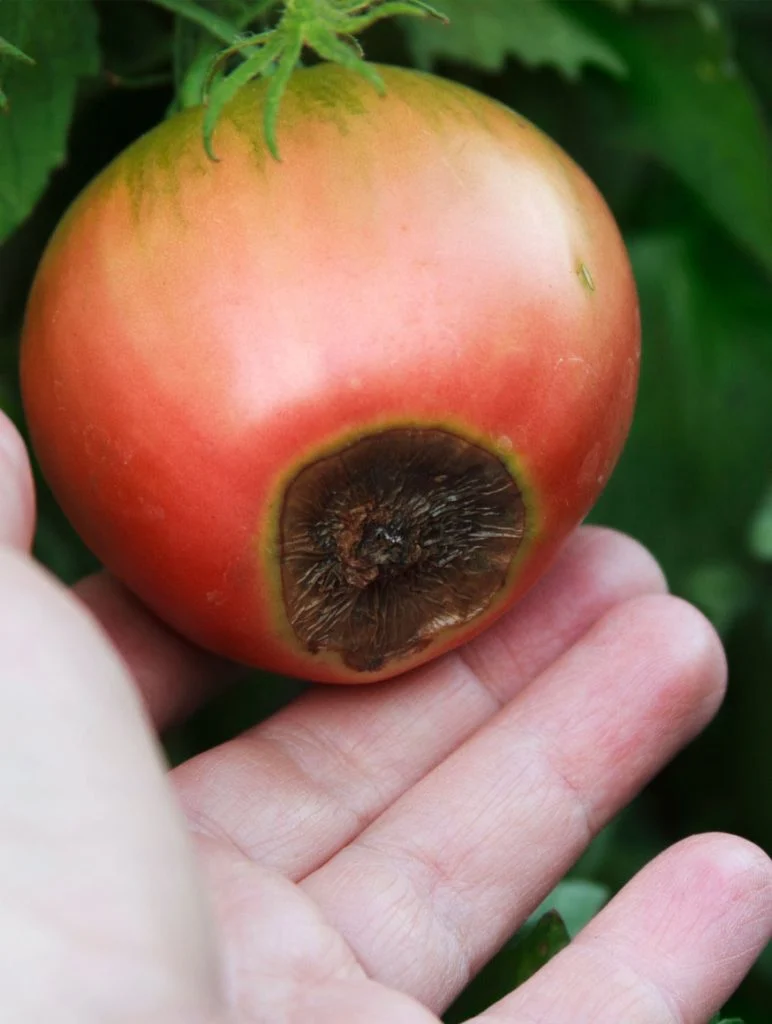
Blossom End Rot (BER)

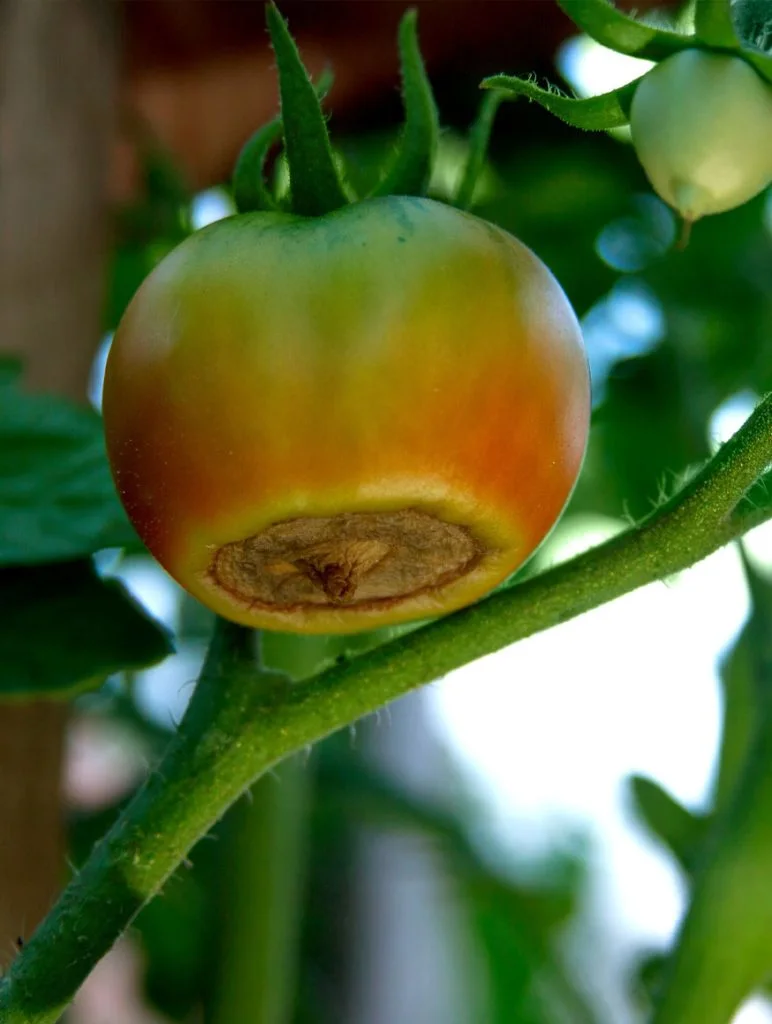
This one’s heartbreaking — your tomatoes start off fine, then suddenly a big black patch appears on the bottom. That’s blossom end rot.
What Causes It
- It’s not a disease, but a physiological disorder.
- It’s linked to a temporary calcium deficiency in the plant, usually caused by inconsistent watering.
- It shows up more in early fruit or during growth spurts.
How to Prevent It
- Keep watering even and consistent — avoid drying out or overwatering
- Mulch, again, is your best friend
- A calcium-rich feed can help, but the real fix is steady moisture
- Don’t remove affected fruit until it’s ripe — it won’t spread, but it won’t get better either
Wilting Plants

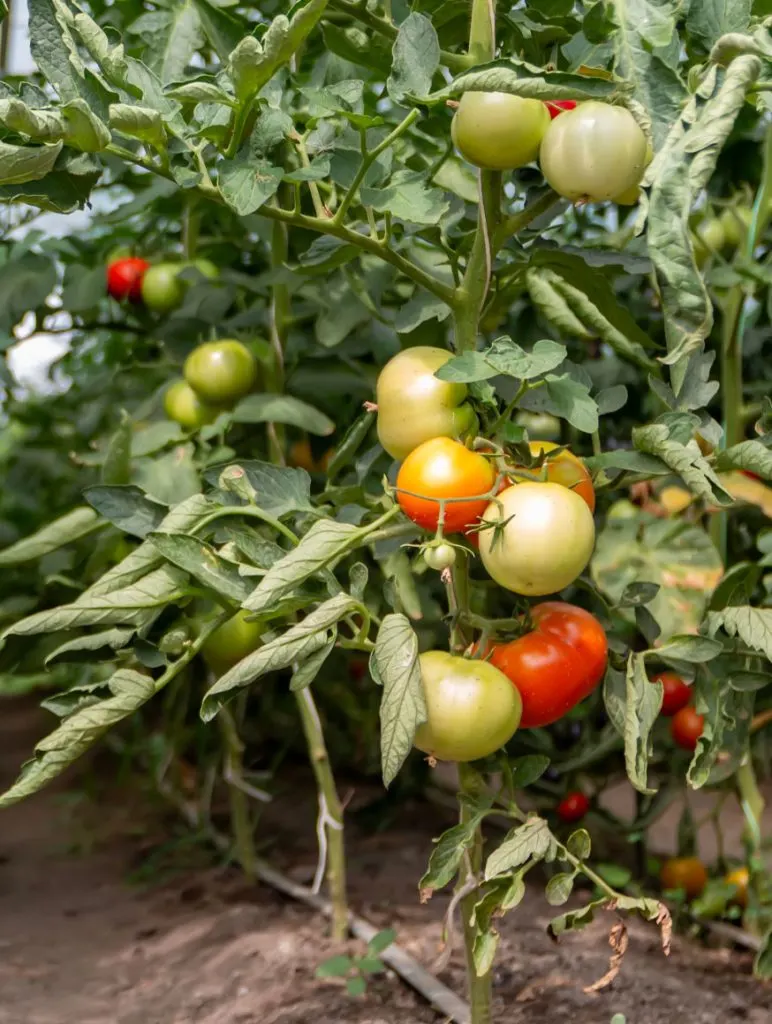
This can be dramatic — you go out in the morning and the whole plant looks like it’s collapsed.
Check for:
- Underwatering — obvious but worth checking first
- Overwatering/root rot — soil feels soggy, roots may be dark and mushy
- Bacterial wilt or fusarium wilt — these are soil-borne diseases, often incurable
- Vine damage — sometimes a snapped stem or damaged root system is the culprit
Solution:
- Rule out watering first. Stick your finger in the soil or lift the pot.
- If the soil is wet and the plant is wilting, root rot or disease may be the issue.
- If it’s dry, give a deep soak and wait a few hours before judging.
Fungal and Bacterial Diseases
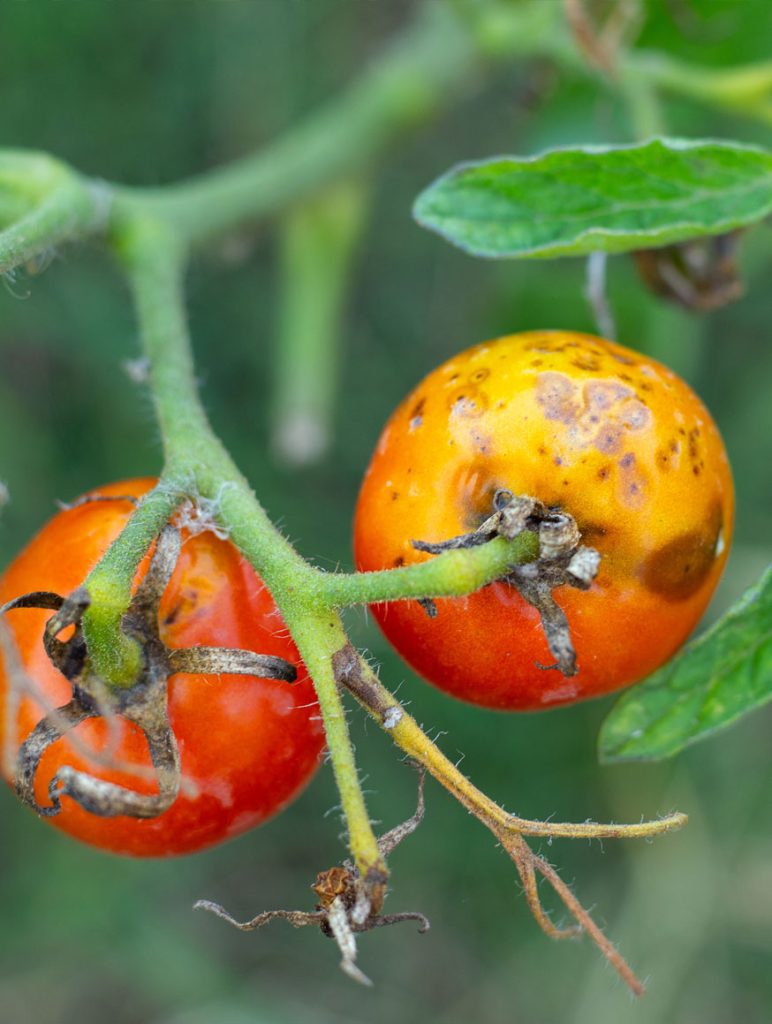
Tomatoes are prone to a number of diseases — most thrive in warm, wet, overcrowded conditions.
Common ones:
- Early Blight: Brown spots with yellow halos, starts on lower leaves
- Late Blight: Greasy, dark lesions that spread rapidly — often after heavy rain
- Powdery Mildew: White, dusty coating on leaves
- Bacterial Speck/Spot: Tiny black or brown spots that can spread to fruit
Prevention & Treatment:
- Space plants well apart
- Remove the lower 6–8 inches of leaves once fruit sets
- Don’t water overhead
- Rotate crops yearly
- Use copper fungicides as a last resort (organic versions are available)
Pests to Watch For
- Aphids – tiny green or black bugs on new growth
- Whitefly – flutters up when you touch the plant
- Tomato Hornworms – large green caterpillars that munch leaves fast
- Spider mites – tiny red dots, fine webbing on leaves
Control Methods:
- Spray aphids off with a strong blast of water
- Use neem oil or insecticidal soap for soft-bodied pests
- Hand-pick hornworms (or let the birds help!)
- Encourage predators like ladybirds and hoverflies with companion planting
Other Tomato Growing Tips for Beginners

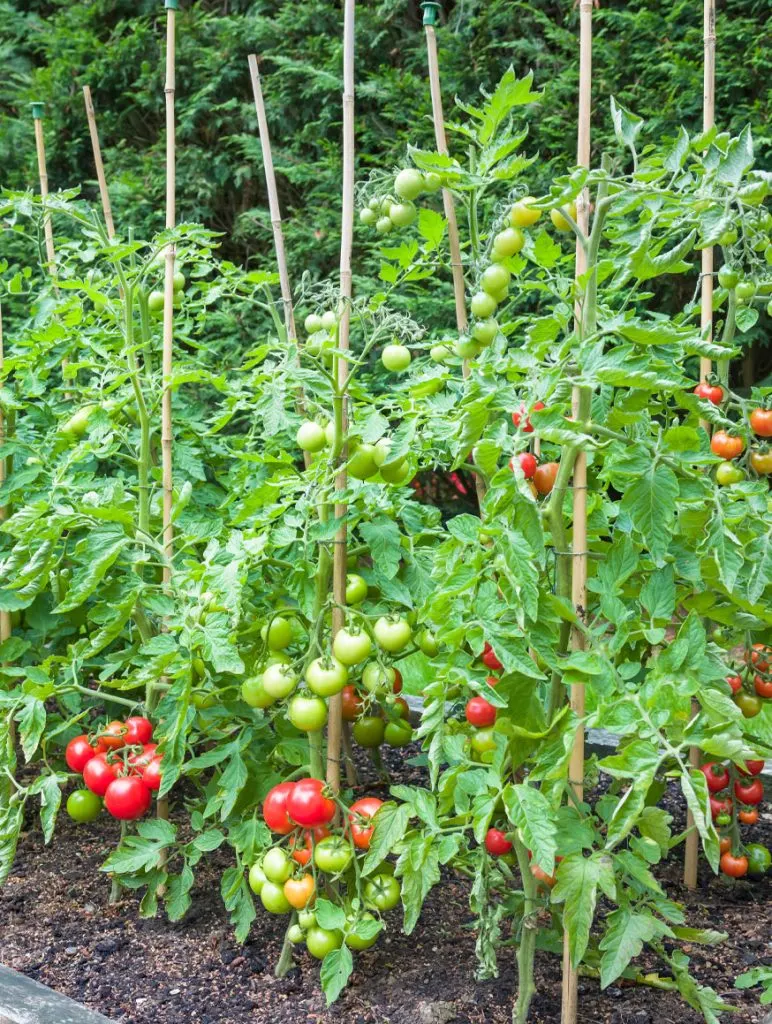
Feed regularly: Once fruit starts forming, switch to a high-potassium feed (like tomato fertiliser) every 1–2 weeks
Support your plants: Use stakes, cages, or string from early on — don’t wait until they flop
Pinch out side shoots (on indeterminate types) to keep growth under control and fruit production focused
Prune lower leaves: Once the plant is fruiting, remove any leaf growth below the first cluster to improve air flow
Don’t be afraid to cut your losses: If a plant is diseased or failing badly, removing it can protect the rest
Final Thoughts
If your tomatoes are giving you grief this summer, you’re definitely not alone. The good news is that many issues can be traced back to watering, nutrition, and ventilation. Master those, and you’re halfway to a bumper harvest.
Have a tomato issue I haven’t covered? Pop it in an email and let’s figure it out together.
See You in the Garden,
Tara 🌿
- About the Author
- Latest Posts


Tara Cunningham is the green-thumbed half of Lawnmowerfixed.com, where she shares simple, no-fuss gardening tips for time-poor homeowners.
She’s a lifelong plant lover with a soft spot for cherry tomatoes, shady corners, and low-maintenance herbs.