
Nothing beats the taste of fresh, homegrown salad greens. If you love crisp romaine, tender butterhead, or peppery arugula, growing your own lettuce and greens means you’ll always have a steady supply of vibrant, chemical-free produce right at your fingertips.


If you’ve ever dreamed of snipping fresh greens straight into your lunch—this one’s for you.
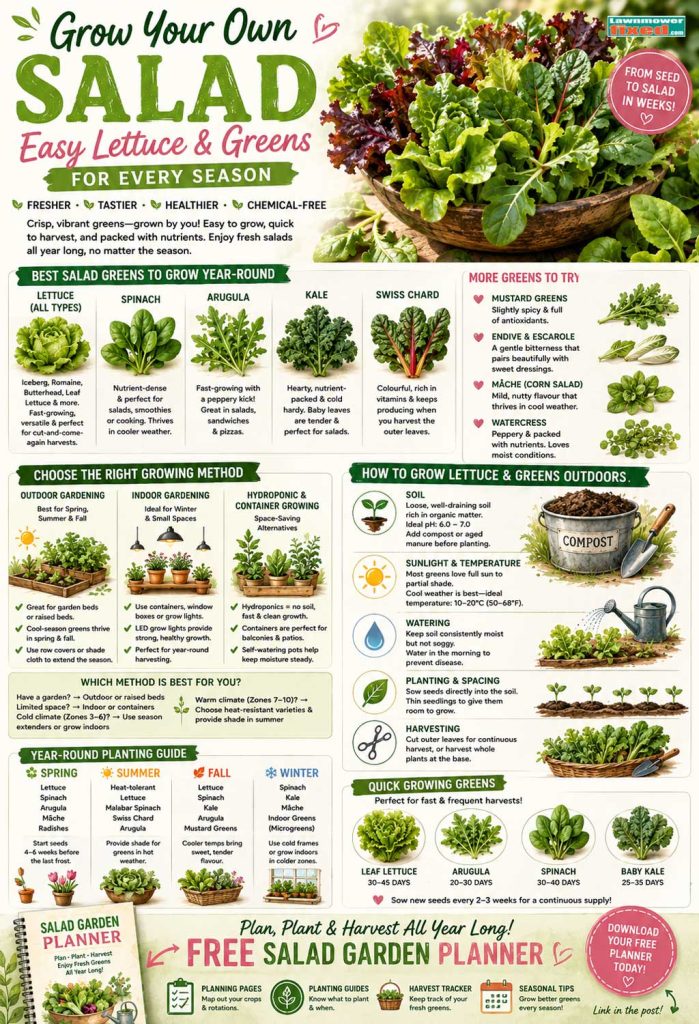
Lettuce and leafy greens are some of the easiest and most rewarding crops you can grow at home. Sunny windowsill, a raised bed, or a pot by the back door, they don’t need much space or fuss. And the payoff? Crisp, colourful leaves that taste miles better than anything in a bag.
No more sad, wilted salads from the shop. Growing your own means better flavour, more nutrients, and no questionable chemicals. Plus, it’s surprisingly quick—some varieties go from seed to plate in just a few weeks.
We’ll cover the best types of greens to grow, where and when to plant them, and how to keep the harvest coming.


👇 If you’re into this kind of thing, be sure to join our newsletter. Subscribers get access to a whole library of printables—planting guides, planner pages, crop sheets—and we’re adding new ones all the time.
Best Salad Greens to Grow Year-Round
Some greens thrive in cool weather, while others can handle heat or grow well indoors. Here are some of the easiest and most rewarding salad greens to grow throughout the year.
Lettuce Varieties


Lettuce is one of the most versatile salad greens, with different types suited for various growing conditions.
Iceberg – Classic crisphead variety, though it requires more space and time to mature.
Romaine – Crunchy and sturdy, great for Caesar salads.
Butterhead (Bibb, Boston) – Soft, tender leaves with a mild flavor.
Leaf Lettuce (Green or Red) – Fast-growing and ideal for cut-and-come-again harvesting.
Spinach


A nutrient-dense green that thrives in cooler temperatures and can be grown year-round with proper care. It’s rich in iron and perfect for salads, smoothies, or sautéing.
Arugula


This fast-growing green has a peppery kick that adds bold flavor to salads. It grows well in spring and fall but can also be cultivated indoors for fresh greens year-round.
Kale


A hearty green that withstands cold temperatures, kale is a great addition to salads and can also be used in smoothies or cooked dishes.
Baby kale leaves are tender and perfect for raw salads.
Swiss Chard


This colorful green is packed with vitamins and can be grown continuously by harvesting the outer leaves while allowing the plant to keep producing.
Other Salad Greens to Try
- Mustard Greens – Slightly spicy and packed with antioxidants.
- Endive & Escarole – Adds a slight bitterness that pairs well with sweet dressings.
- Mâche (Corn Salad) – A mild, nutty green that thrives in cooler weather.
- Watercress – A nutrient powerhouse with a peppery taste, best grown in moist conditions.
With a mix of these greens, you can create a variety of fresh and flavorful salads all year long, adjusting your choices based on the season and your growing space.
Choosing the Right Growing Method
Lettuce and salad greens are incredibly adaptable, allowing you to grow them in various ways depending on your space, climate, and time of year. If you prefer a traditional garden, raised beds, containers, or an indoor setup, choosing the right method will help you keep fresh greens on your plate year round.
Outdoor Gardening: Best for Spring, Summer, and Fall


For those with garden space or raised beds, planting outdoors is the most natural way to grow lettuce and greens.
- Best suited for USDA Zones 3-10, depending on the variety.
- Cool-season greens (lettuce, spinach, arugula) thrive in early spring and fall.
- Heat-tolerant varieties (Jericho romaine, Malabar spinach) work well in warmer zones.
- Row covers or shade cloth can extend the growing season in summer and protect against frost in colder months.
Indoor Gardening: Ideal for Winter and Small Spaces


If you live in a colder region or lack outdoor space, growing salad greens indoors is a great alternative.
- Use containers, window boxes, or hydroponic systems to grow year-round.
- LED grow lights can provide the necessary light for strong, healthy growth.
- Choose compact varieties like butterhead lettuce or baby greens that adapt well to indoor conditions.
Hydroponic and Container Growing: Space-Saving Alternatives
Hydroponic and container gardening allow you to grow greens efficiently with minimal space.
- Hydroponics requires no soil, using water and nutrients for fast, clean growth.
- Containers are perfect for patios, balconies, or small yards.
- Self-watering pots can help maintain consistent moisture levels.
Which Growing Method is Best for You?
- If you have a yard or garden bed → Choose traditional or raised-bed gardening.
- If you have limited space or want year-round greens → Grow indoors or try hydroponics.
- If you live in a colder USDA zone (3-6) → Use season extenders like cold frames or grow indoors in winter.
- If you live in a warmer USDA zone (7-10) → Choose heat-resistant varieties and provide shade in summer.
How to Grow Lettuce and Greens Outdoors
By planting at the right time, choosing the best location, and following simple care tips, you can enjoy a continuous harvest from spring to fall—and even into winter, with the right techniques.
Best Soil Conditions for Healthy Greens
- Lettuce and salad greens prefer loose, well-draining soil rich in organic matter.
- Aim for a pH level between 6.0 and 7.0 for optimal growth.
- Add compost or aged manure before planting to improve soil fertility.
Sunlight and Temperature Needs
- Most salad greens thrive in full sun to partial shade.
- In cooler months (spring and fall), plant in a sunny spot for warmth.
- In hotter climates (USDA zones 7-10), provide afternoon shade or use shade cloth to prevent bolting.
Planting Methods: Direct Seeding vs. Transplants
- Direct seeding:
- Best for leaf lettuces, spinach, and arugula since they grow quickly.
- Sow seeds ¼ inch deep and thin seedlings to the recommended spacing.
- Transplants:
- Great for head lettuces and slower-growing greens.
- Start seeds indoors 3-4 weeks before the last frost, then transplant outdoors.
Watering and Fertilizing for Fast Growth
- Keep soil evenly moist but not waterlogged—greens have shallow roots and dry out quickly.
- Water in the morning to reduce disease risk.
- Feed every few weeks with a balanced organic fertilizer or compost tea for steady growth.
Extending the Growing Season
- Mulch around plants to retain moisture and regulate soil temperature.
- Use row covers or cold frames to protect greens from frost in colder regions (USDA zones 3-6).
- Succession planting: Sow new seeds every 2-3 weeks for a continuous harvest.
Growing Lettuce and Greens Indoors
With the right setup, you can enjoy crisp lettuce, tender spinach, and flavorful arugula no matter the season. Indoor growing is perfect for those with limited outdoor space or gardeners in colder zones who want to extend their harvest beyond the traditional growing season.
Choosing the Right Containers and Potting Mix
- Use shallow containers with good drainage—lettuce and greens have shallow roots.
- A wide planter or seed tray is ideal for growing multiple plants in a small space.
- Use a high-quality potting mix that is light, well-draining, and enriched with organic matter.
Providing Enough Light for Strong Growth
- Lettuce and greens need 12-16 hours of light per day to grow well indoors.
- A south-facing window can work in winter, but most indoor setups benefit from LED grow lights.
- Position grow lights 6-12 inches above the plants and adjust as they grow.
A small grow light setup like this one on Amazon can help you harvest greens all year round—no garden required.
How to Maintain Proper Humidity and Temperature
- Ideal indoor growing temperatures: 60-70°F (15-21°C) for most salad greens.
- Keep humidity levels around 40-60% to prevent drying out or fungal issues.
- Avoid placing plants near heating vents or cold drafts.
Watering and Feeding Indoor Greens
- Water when the top inch of soil feels dry, keeping the soil consistently moist but not soggy.
- Use a diluted liquid fertilizer every 2-3 weeks to promote steady growth.
Harvesting for Continuous Production
- Cut-and-come-again method: Trim outer leaves and let the plant continue growing.
- Microgreens and baby greens: Harvest within 2-3 weeks for tender, flavorful leaves.
How to Harvest and Regrow Salad Greens
One of the best things about growing your own lettuce and greens is that you can harvest them multiple times from the same plants. By using the right harvesting techniques, you can extend your yield and even regrow greens from scraps, ensuring a continuous supply of fresh salads.
When and How to Harvest for Continuous Production
Lettuce and salad greens can be harvested at different stages, depending on your preference:
- Baby greens: Ready in 20-30 days after planting, with tender leaves perfect for salads.
- Mature leaves: Harvest when they are 4-6 inches tall, usually within 45-60 days.
- Full heads: If growing head lettuce (romaine, butterhead), harvest the entire plant when fully formed.
Cut-and-Come-Again Harvesting Method


This method allows you to keep harvesting from the same plant for weeks.
The plant will continue to produce new leaves for multiple harvests.
Use sharp scissors or garden shears.
Cut the outer leaves first, leaving at least 2 inches of the base intact.
How to Regrow Lettuce from Cuttings
If you want an easy way to regrow lettuce indoors, you can use store-bought or homegrown scraps:
- Cut the lettuce head about 1-2 inches from the base.
- Place the base in a shallow dish of water, ensuring only the bottom is submerged.
- Keep the dish in a sunny windowsill and change the water every 1-2 days.
- Within a few days, new leaves will sprout.
- Once roots develop, transfer the regrown lettuce into soil for continued growth.
Common Problems and How to Fix Them
Even though lettuce and salad greens are easy to grow, they can face a few challenges. Knowing how to identify and fix common problems will help keep your plants healthy and productive.
1. Bolting: Why It Happens and How to Prevent It
Bolting occurs when lettuce and greens suddenly grow tall and start flowering, making the leaves taste bitter.
- Causes: Hot temperatures, long daylight hours, and drought stress.
- Prevention:
- Choose heat-resistant varieties if growing in warm weather.
- Provide shade during hot afternoons using shade cloth or taller plants.
- Keep soil evenly moist to reduce stress on the plant.
- Harvest frequently to slow down the bolting process.
2. Pest Control for Organic Greens
Lettuce and greens are prone to pests, especially when grown outdoors. Some common culprits include:
- Aphids: Small, sap-sucking insects that weaken plants.
- Fix: Spray with a mild soapy water solution or introduce ladybugs.
- Slugs and Snails: They leave holes in leaves and can quickly destroy young plants.
- Fix: Use crushed eggshells, diatomaceous earth, or copper tape around plants.
- Caterpillars (Cabbage Loopers): Chew large holes in leaves.
- Fix: Hand-pick them off or use an organic BT (Bacillus thuringiensis) spray.
3. Yellowing Leaves and Nutrient Deficiencies
If lettuce leaves turn yellow, it may be due to overwatering, poor drainage, or lack of nutrients.
- Fix:
- Ensure the soil drains well and avoid excessive watering.
- Feed plants with a balanced organic fertilizer or compost tea.
- If the lower leaves yellow first, add a nitrogen-rich fertilizer to boost growth.
4. Stunted Growth or Wilting
If your greens are not growing well or appear wilted, check for these issues:
- Insufficient sunlight: Move plants to a sunnier location or add grow lights for indoor setups.
- Overcrowding: Thin out seedlings to allow proper airflow and nutrient uptake.
- Root rot from overwatering: Let the soil dry slightly between waterings and use well-draining soil.
Salad Green Companion Planting


Companion planting is a great way to improve the health, yield, and flavor of your lettuce and salad greens.
By planting certain crops together, you can naturally deter pests, enhance growth, and maximize space in your garden. I created an entire post on the topic, and you can check it out here: Companion planting for bigger harvest
Best Companion Plants for Lettuce and Greens
- Carrots – Their deep roots loosen the soil, helping lettuce roots grow more easily.
- Radishes – Quick-growing radishes can be harvested early, making room for slow-growing lettuce.
- Onions and Chives – Repel aphids, slugs, and other pests that attack tender lettuce leaves.
- Strawberries – Grow well alongside lettuce, as they have similar moisture needs without competing for space.
- Dill and Cilantro – Attract beneficial insects that help control pests like aphids and caterpillars.
- Marigolds and Nasturtiums – Act as natural pest deterrents, keeping slugs, beetles, and aphids away from salad greens.
Plants to Avoid Near Lettuce and Greens
Some plants can hinder the growth of lettuce and other salad greens, either by competing for nutrients or by releasing growth-inhibiting compounds. Avoid planting lettuce near:
- Cabbage, Broccoli, and Kale – These members of the brassica family can overshadow lettuce and compete for nutrients.
- Fennel – Releases compounds that can stunt the growth of lettuce and many other plants.
- Beans and Peas – Can grow too tall, shading out lettuce and slowing its growth.
Maximizing Space with Companion Planting
- Interplant lettuce between taller crops like tomatoes or peppers to provide natural shade in warmer months.
- Use fast-growing plants like radishes to maximize garden space and reduce the risk of weeds.
- Surround lettuce beds with pest-repelling flowers and herbs to create a natural barrier against insects.
Growing your own salad greens is easier than you think—just give them a little love, some water, a little sunshine, and some good company (but keep the fennel far away). With fresh, homegrown lettuce at your fingertips, you’ll never have to suffer through another sad, wilted grocery store salad again!
👇 Like the idea of fresh, homegrown salad on demand?
Join our newsletter and get full access to our subscriber-only printable library—packed with planning tools and growing guides to help you grow more with less effort. New resources added regularly!
See you in the garden,
—Tara 🌿
You may find the following links useful:
- About the Author
- Latest Posts


Tara Cunningham is the green-thumbed half of Lawnmowerfixed.com, where she shares simple, no-fuss gardening tips for time-poor homeowners.
She’s a lifelong plant lover with a soft spot for cherry tomatoes, shady corners, and low-maintenance herbs.