
Most people see weeds as a nuisance — something to dig out and dump on the compost pile. But what many don’t realise is that those very weeds are full of nutrients your plants would love.
Deep-rooted weeds like nettles, comfrey and dandelions pull minerals up from the lower layers of the soil — things like nitrogen, potassium and calcium. With a bit of simple prep, you can turn them into a rich, natural liquid feed that works brilliantly across the veg patch, pots, and even flower beds.
In this guide, I’ll walk you through how to make your own weed tea — what to use, how to brew it, and how to apply it safely. It’s an easy way to stretch your garden resources a bit further, and one of my favourite homemade fertilisers.
Let’s turn those weeds into liquid gold and supercharge your garden
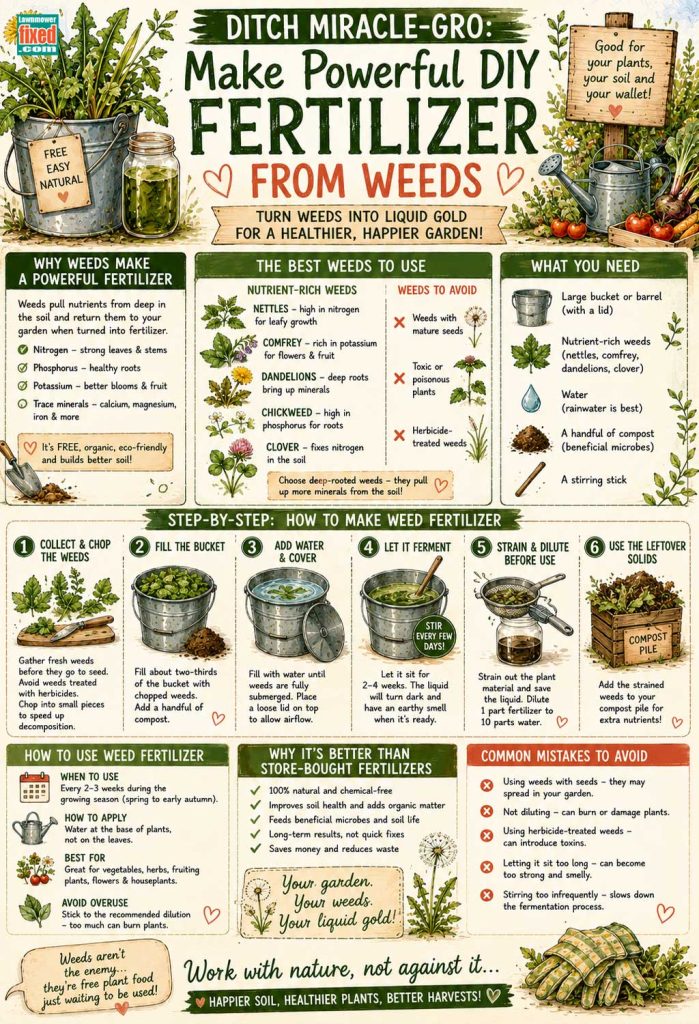
Why Weeds Make a Powerful Fertilizer
Best Weeds to Use for Fertilizer
Step-by-Step Guide to Making Weed Fertilizer
The Benefits of Weed Fertilizer Over Store-Bought Products
Common Mistakes to Avoid When Making Weed Fertilizer
Why Weeds Make a Powerful (and Free) Fertilizer
Instead of fighting weeds, why not have them work for us? By turning weeds into a natural, organic fertiliser, they’ll boost plant growth and improve soil health.
Weeds Are Nutrient Powerhouses
Weeds are excellent at absorbing nutrients from deep in the soil. When you turn them into fertilizer, those nutrients get released back into the garden, feeding your plants. Many common weeds contain:
- Nitrogen for strong leaf and stem growth
- Phosphorus for healthy root development
- Potassium for disease resistance and fruit production
- Trace minerals like calcium, magnesium, and iron
A Free and Sustainable Alternative to Chemical Fertilizers
- No need to spend money on store-bought fertilizers when weeds provide a free source of plant food
- Weed fertilizer is chemical-free and eco-friendly, reducing the risk of chemical runoff
- It builds long-term soil health by encouraging beneficial microbes and organic matter
Better Than Store Bought Fertilizers
Unlike synthetic fertilizers that give plants a short-term nutrient boost, weed fertilizer works with nature to improve soil over time. Instead of just feeding plants, it feeds the entire soil ecosystem, creating healthier, stronger plants naturally.
Like these make-it-yourself garden tips?
I share loads more like this in the subscriber library — from DIY pest sprays to printable garden planners and cheat sheets. It’s free to join, and you’ll get a monthly note from me with what’s going on in the garden. Pop your email in below to get access.
The Best Weeds to Use for DIY Fertilizer
Not all weeds are created equal when it comes to making homemade fertilizer. Some are rich in essential nutrients, while others can be invasive or contain seeds that could sprout in your garden. Choosing the right weeds ensures you create a powerful, nutrient-dense fertilizer without unwanted surprises.
Nutrient-Rich Weeds to Use
These weeds are excellent for making a homemade liquid fertilizer because they contain high levels of nitrogen, potassium, and other essential nutrients:
- Nettles – Packed with nitrogen, a key nutrient for leafy growth
- Comfrey – Rich in potassium, perfect for fruiting and flowering plants
- Dandelions – Deep roots pull up minerals like calcium and iron
- Chickweed – High in phosphorus, which promotes root development
- Clover – Fixes nitrogen in the soil, making it a great addition to fertilizers
Weeds to Avoid
Some weeds may not be ideal for homemade fertilizer due to spreading issues or low nutrient content. Avoid:
- Weeds with mature seeds – These can sprout and spread in your garden
- Toxic or poisonous plants – Certain weeds can be harmful to humans and animals
- Herbicide-treated weeds – Weeds sprayed with chemicals can introduce toxins into your fertilizer
Why Deep-Rooted Weeds Are the Best Choice
Weeds with deep roots act as nature’s nutrient miners, pulling up minerals from deeper soil layers that other plants cannot reach. When used in fertilizer, they return these nutrients to your garden, enriching the soil and feeding your plants naturally.
By selecting the right weeds, you ensure your DIY fertilizer is nutrient-rich, effective, and completely organic.
Step-by-Step Guide to Making Weed Fertilizer
Turning weeds into a nutrient-rich liquid fertilizer is simple and requires just a few basic materials. This method extracts valuable nutrients like nitrogen, potassium, and phosphorus, creating an organic plant food that rivals store-bought fertilizers.
What You Need
- A large bucket or barrel (preferably with a lid)
- A mix of nutrient-rich weeds like nettles, comfrey, dandelions, and clover
- Water (rainwater is ideal but tap water works too)
- A handful of compost to introduce beneficial microbes
- A stirring stick to mix the solution
How to Make Weed Fertilizer
- Collect and chop the weeds
- Gather fresh weeds before they go to seed. Avoid weeds treated with herbicides.
- Chop them into smaller pieces to speed up decomposition.
- Fill the bucket
- Fill about two-thirds of the bucket with chopped weeds.
- Add a handful of compost to introduce beneficial bacteria.
- Add water and cover
- Fill the bucket with water until the weeds are fully submerged.
- Place a loose-fitting lid on top to contain odors but allow airflow.
- Let it ferment
- Stir the mixture every few days to speed up the process.
- The fertilizer will be ready in two to four weeks when the liquid turns dark and has an earthy smell.
- Strain and dilute before use
- Strain out the plant material and save the liquid.
- Dilute the fertilizer at a one to ten ratio (one part fertilizer to ten parts water) before applying to plants.
- Use the leftover solids
- Add the strained weeds to your compost pile for extra nutrients.
How to Use Weed Fertilizer in Your Garden
Now that you have made your homemade liquid fertilizer, it is time to put it to good use. Applying it correctly will ensure your plants get the maximum benefit without overloading them with nutrients.
Diluting Weed Fertilizer for Safe Use
Weed fertilizer is very concentrated, so it should always be diluted before applying to plants.
- For general feeding: Mix one part weed fertilizer with ten parts water
- For heavy feeders (tomatoes, peppers, squash): Mix one part fertilizer with five parts water
- For seedlings and delicate plants: Use a weaker dilution (one part fertilizer to twenty parts water) to avoid overwhelming young roots
Best Ways to Apply Weed Fertilizer
- Soil Drench: Pour the diluted fertilizer at the base of plants to feed the roots directly
- Foliar Spray: Use a spray bottle or garden sprayer to apply to leaves, allowing plants to absorb nutrients faster
- Compost Booster: Add some liquid fertilizer to your compost pile to speed up decomposition
How Often to Use Weed Fertilizer
- Vegetables and flowers: Apply every two to three weeks during the growing season
- Leafy greens and herbs: Use once a week for steady growth
- Fruiting plants: Apply before flowering and again after fruits start forming
- Lawns and shrubs: Feed once a month to encourage deep green growth
By using weed fertilizer regularly and correctly, you will see stronger plants, better yields, and healthier soil—all without spending a dime on store-bought fertilizers.
The Benefits of Weed Fertilizer Over Store-Bought Products
Homemade weed fertilizer is not just a budget-friendly alternative to commercial fertilizers like Miracle-Gro—it is actually better for your plants and the environment. Here’s why you should ditch synthetic fertilizers and switch to this natural, nutrient-rich option.
1. It Is Completely Free
- Weeds are an endless, renewable resource that cost nothing to collect.
- No need to spend money on expensive fertilizers when nature provides all the nutrients your plants need.
2. It Feeds the Soil, Not Just the Plants
- Store-bought fertilizers provide quick nutrients but do little for long-term soil health.
- Weed fertilizer improves soil structure, encourages beneficial microbes, and enhances nutrient cycling.
3. It Is Full of Essential Nutrients
- Contains nitrogen, phosphorus, potassium, and trace minerals that plants need.
- Unlike synthetic fertilizers, weed tea slowly releases nutrients, reducing the risk of overfeeding.
4. No Harmful Chemicals or Salt Buildup
- Many synthetic fertilizers contain salts and additives that build up in the soil over time.
- Weed fertilizer is chemical-free, making it safer for plants, beneficial insects, and the environment.
5. It Reduces Garden Waste
- Instead of discarding weeds, you are recycling them into something useful.
- Helps cut down on waste while enriching your garden naturally.
6. It Helps Prevent Chemical Runoff
- Synthetic fertilizers often leach into groundwater, polluting rivers and lakes.
- Weed fertilizer is fully organic, meaning it will not contribute to water pollution.
By switching to homemade weed fertilizer, you are giving your plants a powerful, natural boost while saving money and protecting the environment–what’s not to love?
Common Mistakes to Avoid When Making Weed Fertilizer
Making weed fertilizer is simple, but a few mistakes can reduce its effectiveness or even harm your plants. Here are the most common pitfalls and how to avoid them.
1. Using Weeds with Mature Seeds
- If weeds have already gone to seed, those seeds may spread in your garden when you use the fertilizer.
- Fix: Harvest weeds before they flower or go to seed to avoid unwanted sprouting.
2. Letting the Mixture Ferment Too Long
- Weed fertilizer should steep for two to four weeks—any longer and it can become too strong or start rotting.
- Fix: Keep a nose on the smell; a strong, earthy odor is good, but a foul, rotten smell means it has broken down too much.
3. Skipping the Dilution Step
- Applying undiluted weed fertilizer can burn plant roots and leaves due to its high nutrient concentration.
- Fix: Always dilute before use—one part fertilizer to ten parts water for general feeding.
4. Using the Wrong Weeds
- Not all weeds are beneficial. Some, like toxic plants or chemically treated weeds, can harm your soil and plants.
- Fix: Stick to nutrient-rich weeds like nettles, dandelions, comfrey, and clover. Avoid anything treated with herbicides.
5. Forgetting to Stir the Mixture
- If the mixture sits too long without stirring, it may develop anaerobic bacteria, leading to bad smells and poor nutrient breakdown.
- Fix: Stir every few days to keep oxygen flowing and speed up fermentation.
6. Applying Too Often
- Overuse of any fertilizer can lead to nutrient imbalances in the soil.
- Fix: Apply weed fertilizer every two to three weeks for most plants and adjust based on their needs.
Weeds might be a gardener’s worst enemy, but with a little DIY magic, they become liquid gold for your plants. So next time you pull a weed, don’t toss it—turn it into free, all-natural plant fuel and let your garden thank you.
Fancy more guides like this one?
Subscribers get access to our growing library of free printables, how-to sheets, and garden planning tools — all beginner-friendly and easy to dip in and out of. It’s where I put the bits that don’t make it into blog posts. Pop your email below and I’ll send over your invite.
See you in the garden,
—Tara 🌿
You may find the following links useful:
- About the Author
- Latest Posts


Tara Cunningham is the green-thumbed half of Lawnmowerfixed.com, where she shares simple, no-fuss gardening tips for time-poor homeowners.
She’s a lifelong plant lover with a soft spot for cherry tomatoes, shady corners, and low-maintenance herbs.